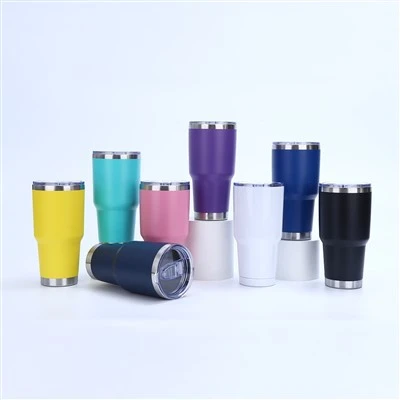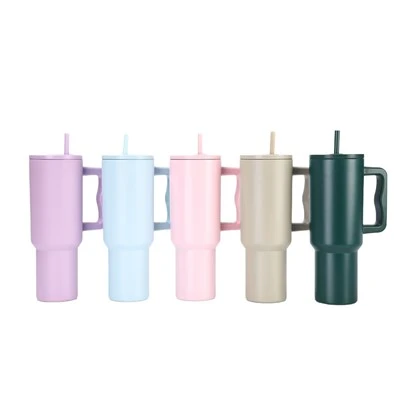

1. After filling the cup with water, screw the stopper and lid on tightly in a clockwise direction and place the cup flat on a table; there should be no leakage. The lid should screw onto the cup mouth smoothly and fit snugly without gaps. This checks the quality of the seal.
2. Check the vacuum insulation performance: Pour boiling water into the vacuum flask and screw the stopper or lid on tightly. After 2–3 minutes, touch the outer surface of the cup body. If the body feels noticeably warm, it indicates that the vacuum seal has been compromised and the product cannot provide effective insulation.
3. Distinguish the quality of plastic parts: New, food-grade plastic is characterized by a mild odor, a glossy surface, a lack of burrs, and durability (resistance to aging). In contrast, ordinary or recycled plastic tends to have a strong odor, a dull appearance, and rough edges, and it ages quickly and breaks easily.
4. A heavier cup is not necessarily better. In a quality vacuum flask, the depth of the inner liner roughly matches the height of the outer shell (with a difference of 16–18 mm), and the actual capacity aligns with the stated specifications. Some inferior flasks contain added sand or cement blocks to compensate for missing weight.